When you’re hanging shelves at arm’s reach overhead or assembling flat-pack furniture in a cramped closet, a full-size 20V drill feels like swinging a sledgehammer to crack a walnut. That’s where DeWalt’s 12V lineup earns its keep. These compact drills deliver enough torque for most household tasks, cabinet installs, trim work, deck board replacement, without the wrist fatigue or bulk that makes you wish you’d grabbed the manual screwdriver instead. For homeowners who don’t frame houses for a living but still want reliable power on demand, a 12V drill hits the sweet spot between a underpowered budget model and a contractor-grade beast.
Table of Contents
ToggleKey Takeaways
- A DeWalt 12V drill balances power and portability for household tasks, delivering 300–350 inch-pounds of torque while weighing just 2.3–2.6 pounds—ideal for overhead work, trim carpentry, and furniture assembly without wrist fatigue.
- The DCD701F2 Xtreme is the top workhorse model, offering a brushless motor, 15-position clutch, two-speed transmission, and bright LED work light in a 6.4-inch compact form for around $150–$170 with two batteries and charger.
- A brushless motor is essential in 2026, providing 25–40% better runtime, cooler operation, and superior torque control compared to older brushed designs.
- The DeWalt 12V platform handles trim work, cabinetry, light electrical tasks, and deck board replacement effectively, but avoid heavy drilling, lag screws over 3 inches, and concrete anchors that exceed its design limits.
- Proper maintenance—including regular chuck cleaning, battery storage at 50–60% charge, and clutch-based torque control—extends your drill’s lifespan to outlast most DIY projects while maintaining performance.
Why Choose a DeWalt 12V Drill for Your DIY Projects
Voltage isn’t everything. A 12V max drill (which actually delivers 10.8V nominal, DeWalt measures at peak charge) trades raw power for maneuverability and runtime efficiency. The motor draws less current, so a 2.0Ah battery lasts through 150–200 screws in softwood or 40–60 holes in pine stud material before needing a charge.
The ergonomics matter more than spec sheets suggest. DeWalt’s 12V drills weigh 2.3–2.6 pounds with battery installed, compared to 3.5–4 pounds for their 20V siblings. That difference compounds over an afternoon of overhead work, ask anyone who’s installed recessed lighting in eight-foot ceilings. The compact head length (around 6.5 inches nose-to-battery) lets you drive screws between joists or inside cabinets where a standard drill won’t fit without contorting your wrist.
These aren’t underpowered toys. DeWalt’s current brushless 12V models deliver 300–350 inch-pounds of torque, enough to drive 3-inch construction screws into dimensional lumber or drill 1-inch holes through hardwood with a quality bit. They won’t replace a corded hammer drill for masonry anchors or handle continuous heavy boring, but for trim carpentry, furniture assembly, light electrical work, and most tasks homeowners tackle regularly, they’re plenty capable.
The 12V platform also costs less upfront. Starter kits with two batteries and a charger typically run $120–$180, compared to $180–$250 for comparable 20V setups. If you already own DeWalt 20V tools, the 12V line won’t share batteries, a consideration if you’re invested in one ecosystem, but for most DIYers starting fresh or supplementing existing tools, the lower buy-in makes sense.
Top DeWalt 12V Drill Models Compared
DeWalt’s 12V lineup has tightened considerably in recent years. The brand discontinued older models like the DCD710 in favor of the Xtreme series, which uses brushless motors for better runtime and power efficiency. Two models dominate home project use in 2026.
DeWalt DCD701F2 Xtreme 12V Max Brushless Drill/Driver
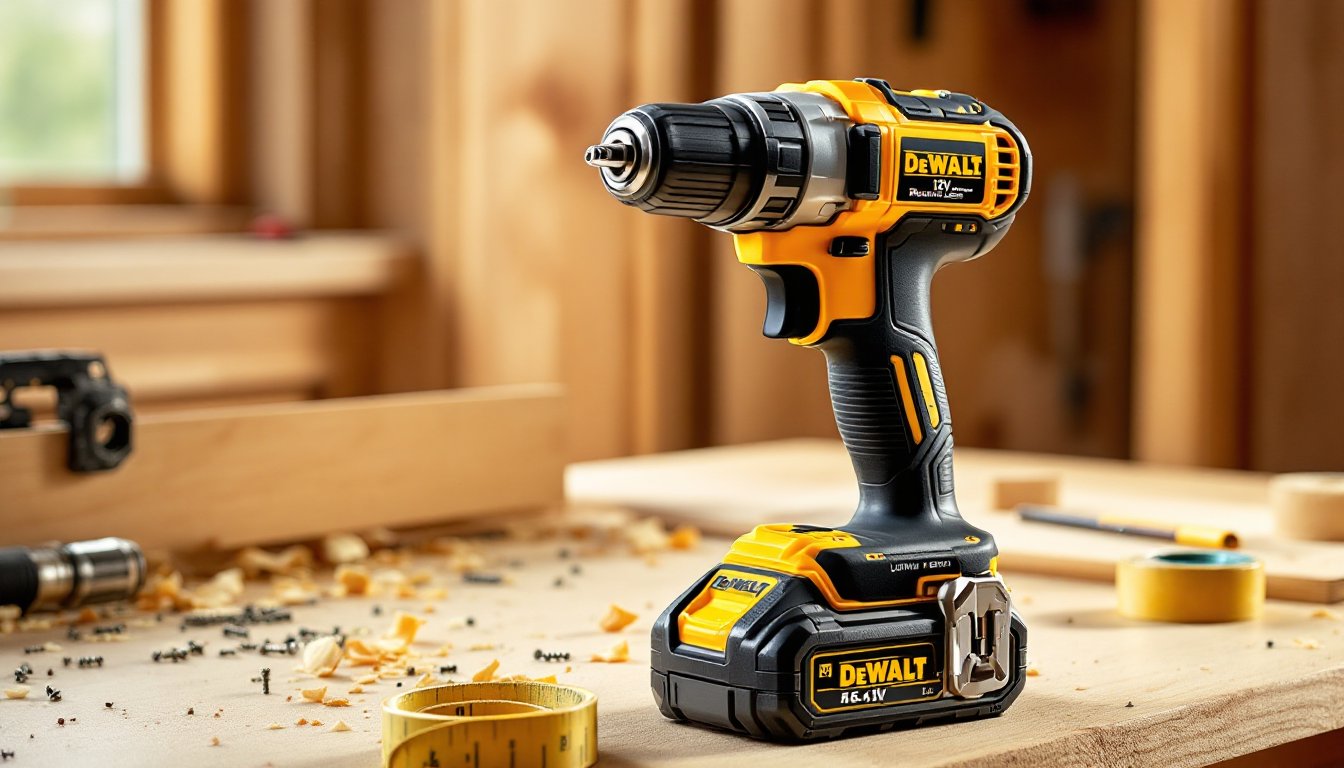
This is the workhorse. The DCD701F2 ships as a kit with two 2.0Ah batteries, a charger, and a contractor bag for around $150–$170 (prices fluctuate with promotions). The brushless motor delivers 340 inch-pounds of max torque across two speed settings: 0–450 RPM for driving and 0–1,500 RPM for drilling.
The 15-position clutch gives you fine control when driving trim screws or working with softer materials where you don’t want to overdrive fasteners and dimple the surface. The ½-inch ratcheting chuck accepts standard hex-shank bits and round-shank drill bits up to ½-inch diameter, though you’ll want to stick with bits under ⅜-inch for best performance in hardwood.
One standout feature: the LED work light with a 20-second delay. It’s brighter than older models and positioned to actually illuminate the bit contact point, not just flood the general area. The tool measures 6.4 inches front to back, making it DeWalt’s shortest 12V drill/driver and legitimately useful in tight spots.
Weight with a 2.0Ah battery installed is 2.4 pounds. The handle has decent grip texture without the rubberized coating that degrades into sticky goo after a few years in a hot garage.
DeWalt DCF601F2 Xtreme 12V Max Screwdriver
This isn’t technically a drill, it’s a dedicated screwdriver with a ¼-inch hex chuck that only accepts hex-shank bits. But for assembly work, cabinetry, and any project where you’re driving dozens of screws without drilling pilot holes, it’s worth considering alongside the DCD701.
The DCF601F2 is lighter (2.1 pounds with battery), shorter (5.6 inches), and cheaper (around $130 for the same two-battery kit). Torque tops out at 108 inch-pounds, which sounds weak compared to the DCD701 but is plenty for #8 and #10 screws in most applications. Professional cabinet installers use these all day.
The clutch has 15 positions plus a dedicated drill mode, though without a true drill chuck, you’re limited to hex-shank drill bits (which work fine for pilot holes but aren’t ideal for larger boring). The real advantage is balance and control, the inline design puts less rotational strain on your wrist during repetitive driving, and the tool fits in spaces where even the DCD701 won’t reach.
For DIYers who mostly assemble and install rather than drill, or anyone doing a kitchen remodel with lots of hardware and trim, pairing the DCF601 with a corded drill or a larger 20V drill covers more ground than a single 12V drill/driver alone.
Essential Features to Look for in a 12V Drill
Not all compact drills are equal. Here’s what separates a tool you’ll reach for from one that collects dust.
Brushless motor: Non-negotiable in 2026. Brushless designs run cooler, deliver 25–40% more runtime per charge, and last years longer than brushed motors. They also provide better torque control at low speeds, which matters when you’re finessing a screw into pre-drilled hardwood without stripping the head.
Two-speed transmission: Single-speed drills force you to feather the trigger constantly. A proper two-speed gearbox (usually 0–400/0–1500 RPM or similar) gives you low-speed torque for driving and high-speed drilling without overheating the motor.
Adjustable clutch with 12+ positions: Cheap drills have 8–10 clutch settings that are spaced too far apart to be useful. Fifteen or more positions let you dial in exactly the torque you need for different screw sizes and materials, preventing overdriving that splits trim or strips pilot holes.
Ratcheting chuck (½-inch minimum): Keyless chucks are standard, but a ratcheting design grips bits more securely with less hand torque required to tighten. Single-sleeve chucks are easier to operate one-handed than two-sleeve designs.
LED placement and brightness: Many drills have LEDs that illuminate everything except where the bit contacts the work. Look for lights positioned near the chuck that actually cast light forward, and check if they have a delay (15–20 seconds after trigger release) so you’re not working in shadow the moment you stop drilling.
Battery capacity vs. weight tradeoff: DeWalt 12V batteries come in 1.5Ah, 2.0Ah, 3.0Ah, and 5.0Ah sizes. The 2.0Ah hits the sweet spot for most users, enough capacity for a half-day’s work without adding nose-heavy bulk. The 5.0Ah batteries are overkill unless you’re doing production work and turn the drill into a front-heavy tool that defeats the purpose of going compact.
Belt clip and bit storage: Small details, but they matter. A metal belt clip (preferably reversible for lefties) keeps the drill accessible without a tool bag. Some models include onboard bit storage: it’s handy until the spring-loaded doors break, which they usually do.
Best Home Projects for Your DeWalt 12V Drill
These drills punch above their weight class, but knowing their limits saves frustration.
Hanging cabinets and shelving: Perfect application. The compact size lets you work inside cabinet boxes to predrill for euro screws and drive hinge mounting plates. The drill has enough power for ⅛-inch pilot holes through hardwood face frames and adequate torque to drive #8 x 2½-inch cabinet screws into studs through drywall and backing material.
Trim and finish carpentry: Baseboards, crown molding, door casings, chair rail, all within the 12V wheelhouse. Use a ⅛-inch bit to predrill nail holes (preventing splits), or drive trim screws directly if you’re using a modern pneumatic alternative. The low weight reduces arm fatigue during overhead crown installation, and the compact head reaches into corners where baseboards meet at inside angles.
Furniture assembly and flat-pack installs: This is where the 12V shines. Assembling Ikea cabinets, bed frames, desks, anything with cam locks and confirmat screws. The clutch prevents overtightening hardware that’s designed to specific torque specs, and the short length maneuvers inside drawer boxes and under desk aprons.
Light electrical work: Drilling ½-inch holes through studs for running NM cable (Romex)? No problem, though you’ll want sharp bits and won’t want to drill more than a dozen holes per charge. Mounting electrical boxes to studs, installing switch and outlet covers, assembling panel interiors, all comfortable work. (Always follow NEC requirements and pull permits where required for electrical modifications.)
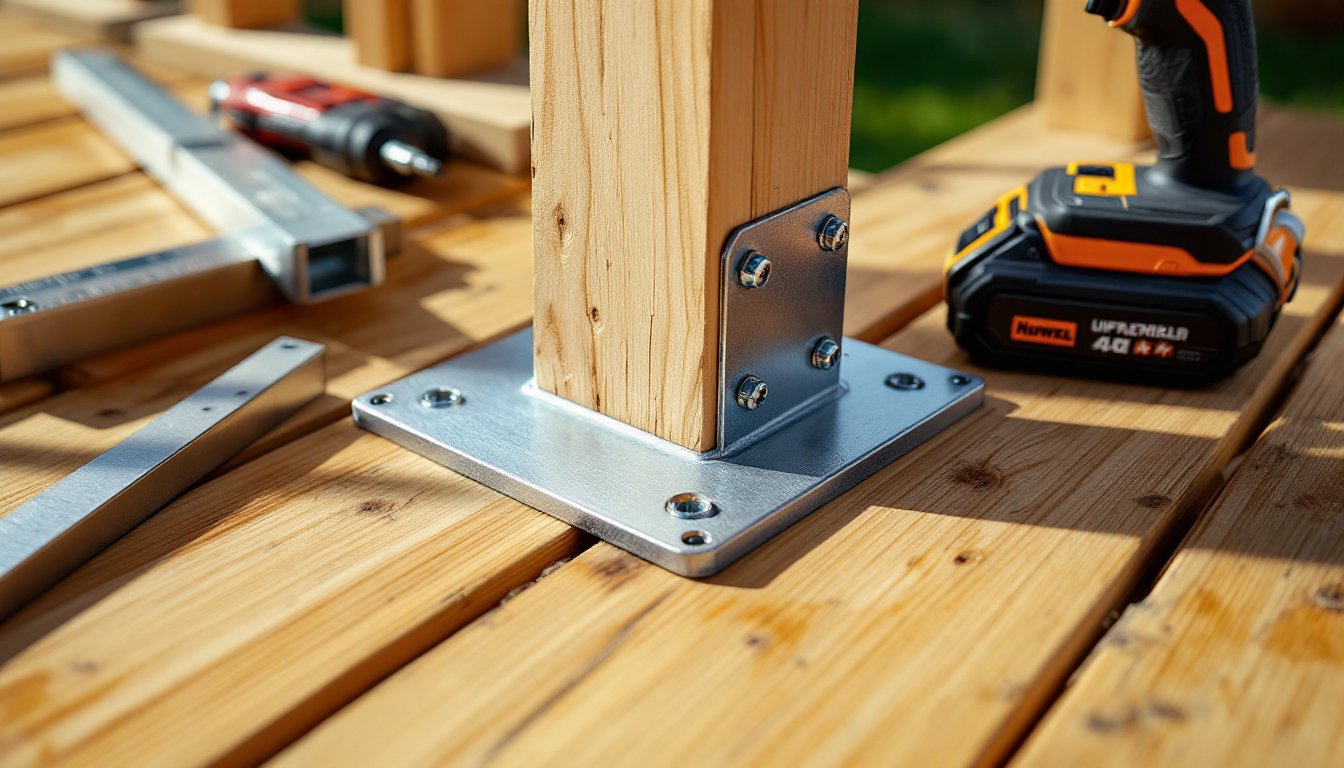
Deck board replacement and light framing repairs: Driving 2½–3-inch deck screws through ¾-inch deck boards into joists is feasible with a 12V drill, especially if you predrill or use self-tapping screws. For continuous deck building you’d want more power, but replacing 10–20 damaged boards? The 12V handles it fine and won’t exhaust your wrist.
What to avoid: Don’t expect a 12V drill to bore repeated 1-inch or larger holes through multiple studs, that’s 20V or corded drill territory. Lag screws over 3 inches, concrete anchors, and auger bits for deep holes all exceed the tool’s design limits. For those tasks, rent or buy a higher-voltage tool.
Maintenance Tips to Extend Your Drill’s Lifespan
Cordless drills don’t need much maintenance, but small habits prevent expensive failures.
Clean the chuck regularly: Sawdust and drywall dust migrate into the chuck mechanism, causing bits to slip. Every few months, open the chuck fully, blow out debris with compressed air (or a lung-powered puff), and wipe the jaws with a dry rag. Don’t use oil or lubricant, it attracts more dust.
Store batteries at partial charge: Lithium-ion batteries degrade fastest when stored fully charged or fully depleted. For long-term storage (more than a month), charge batteries to around 50–60% (roughly two bars on DeWalt’s three-bar indicator). Store them in a cool, dry location, not a hot garage or freezing shed. Temperature extremes kill capacity.
Cycle batteries periodically: If a battery sits unused for months, run it through a full discharge and recharge cycle before storage. This recalibrates the battery management system and prevents cells from drifting out of balance.
Check chuck tightness under load: If bits start slipping during use, the chuck might need adjustment. Tighten the chuck by hand, insert a bit, then hold the chuck while briefly pulsing the trigger in reverse (not forward, that loosens it). This seats the jaws more firmly than hand-tightening alone.
Inspect vent slots monthly: Brushless motors run cooler than brushed, but they still need airflow. Check the vent openings around the motor housing for packed dust. A soft brush or compressed air clears them in seconds.
Avoid overtightening the chuck on small bits: Cranking down too hard on ⅛-inch or smaller bits can deform the chuck jaws over time, causing larger bits to wobble later. Tighten firmly but not with full hand force.
Use the clutch setting, not the trigger: Trying to control torque by feathering the trigger wears the motor and switch prematurely. Set the clutch to the correct position and pull the trigger fully, the clutch will disengage at the right torque automatically.
Don’t leave batteries on the charger indefinitely: DeWalt’s chargers have overcharge protection, but leaving batteries connected for weeks at a time still creates low-level stress. Once the charge light indicates full, remove the battery.
Follow these basics and a DeWalt 12V drill will outlast most DIYers’ project ambitions. The batteries will fail before the tool does, plan on replacing them every 3–5 years depending on use frequency, and consider buying a bare tool if you’re upgrading within the same voltage platform.
For the majority of homeowners, a quality 12V drill like the DCD701F2 covers 80% of household drilling and driving tasks while staying light enough that you’ll actually grab it instead of hunting for a screwdriver. It won’t replace a full-size drill for heavy work, but for trim, assembly, and everyday fixes, it’s the tool that earns its spot on the charger.