Tired of watching your carefully labeled containers emerge from the dishwasher looking like they went through a shredder? Standard stickers curl, fade, and peel after a single wash cycle, leaving sticky residue and illegible text. Dishwasher safe stickers solve this problem by standing up to high heat, harsh detergents, and powerful water jets. Whether you’re organizing pantry staples, labeling school gear, or streamlining your kitchen workflow, the right stickers make the difference between a system that lasts and one that falls apart in a week.
Table of Contents
ToggleKey Takeaways
- Dishwasher safe stickers must be made from vinyl or polyester films with permanent acrylic adhesive to withstand high heat, harsh detergents, and repeated wash cycles.
- Proper surface preparation—cleaning with rubbing alcohol, ensuring complete dryness, and applying firm pressure for 10-15 seconds—is critical to achieving a durable bond that lasts through multiple dishwasher cycles.
- Kitchen organization systems benefit significantly from dishwasher safe stickers on jars, meal prep containers, and water bottles, eliminating the need for replacement labels after each wash.
- Placement strategy matters: position stickers on flat surfaces away from curves and corners, avoid the bottom where water pools, and prioritize top-rack placement for items with marginal durability.
- Test adhesive compatibility by dropping water on the target surface—if it beads up, the sticker will bond well; if it soaks in, you need specialized adhesive formulations for porous materials.
- Quality dishwasher safe stickers cost $0.25–$1.00 each and typically require 24–48 hours of cure time before the first wash to ensure permanent adhesion.
What Makes a Sticker Dishwasher Safe?
Not all adhesive labels can survive the dishwasher’s hostile environment. A truly dishwasher safe sticker must handle temperatures between 120°F and 160°F, resist abrasive detergents, and maintain adhesion through repeated wet-dry cycles.
Material composition is the first critical factor. Vinyl and polyester films outperform paper-based stickers because they don’t absorb water or break down when saturated. Look for stickers made from coated polypropylene or polyester laminate, these materials create a waterproof barrier that prevents ink from bleeding or fading.
The adhesive matters just as much as the face material. Permanent acrylic adhesives bond aggressively to glass, plastic, and ceramic surfaces, creating a seal that high-pressure spray jets can’t compromise. Water-based or repositionable adhesives will fail within one or two wash cycles.
Ink and printing method determine whether your labels stay legible. Thermal transfer printing and UV-resistant inks handle heat and moisture far better than standard inkjet printing. Many commercial dishwasher safe stickers use screen printing or digital printing with protective laminate overlays that lock the ink beneath a clear coating.
Manufacturers who test their products to NSF/ANSI 51 standards (the food equipment certification for commercial dishwasher use) provide the most reliable performance data. While home dishwashers typically run gentler cycles than commercial units, this certification indicates the sticker can handle extreme conditions.
Best Uses for Dishwasher Safe Stickers in Your Home
Organizing Kitchen Items and Food Storage
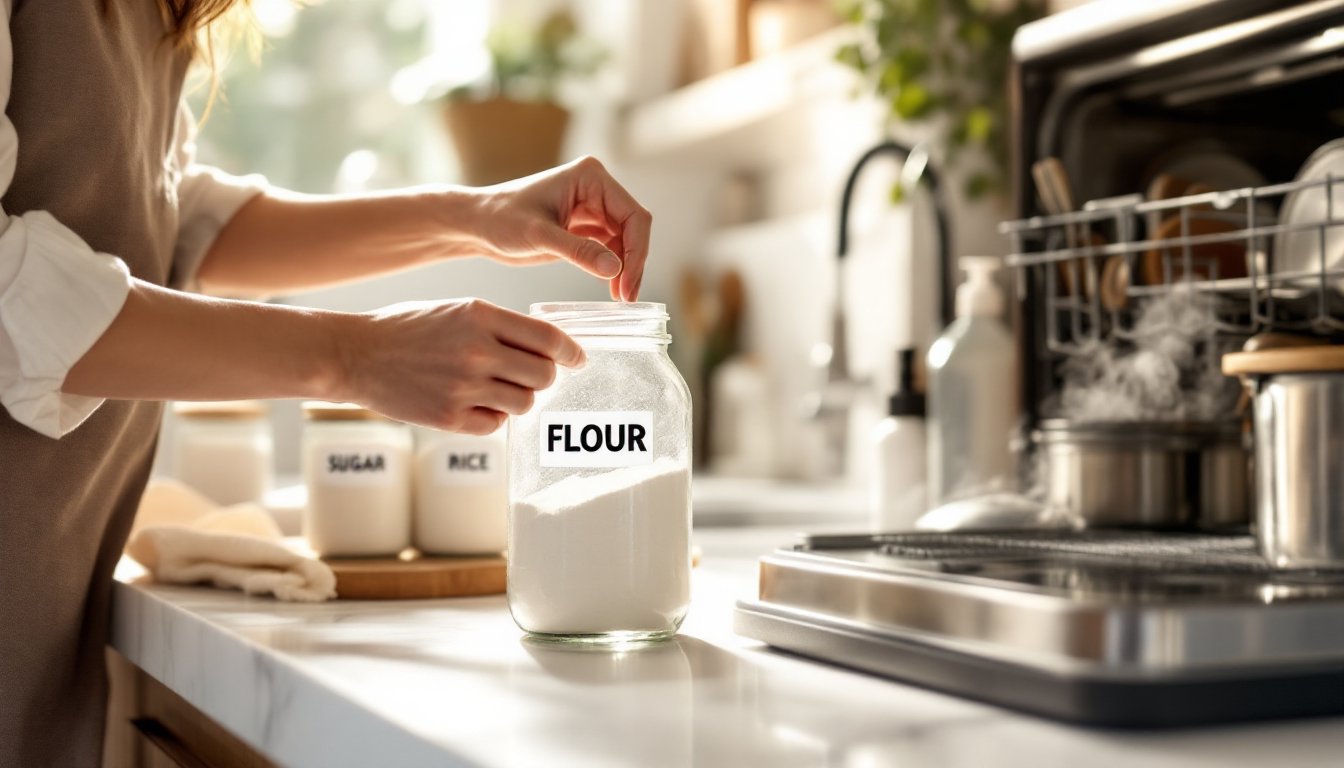
Dishwasher safe labels transform chaotic cabinets into functional systems. Apply them to glass storage jars for flour, sugar, rice, and other pantry staples, the labels survive when you wash containers between refills. This works especially well for bulk buying, where you’re constantly cycling through the same jars.
Date labels help track leftovers and meal prep containers. Many home cooks following efficient kitchen organization systems use small waterproof stickers to note prep dates on glass meal prep containers. After a week, toss the containers in the dishwasher, and the labels remain intact for the next batch.
Spice jar organization becomes sustainable with reusable labels. Standard paper labels turn to mush when moisture gets in, but vinyl stickers stay put through washing and refilling. This is particularly useful if you buy spices in bulk and decant them into uniform jars.
Water bottles, travel mugs, and reusable coffee cups benefit from personalized dishwasher safe stickers. In households where everyone has similar drinkware, labels eliminate the “whose cup is this?” problem. The stickers withstand daily dishwasher cycles without peeling at the edges.
Labeling Kids’ Bottles, Lunchboxes, and School Supplies
Daycare and school settings require durable labels that survive industrial dishwashers running at higher temperatures than home units. Name labels on sippy cups and baby bottles prevent mix-ups and lost items. Most childcare facilities run bottles through sanitizing cycles multiple times daily, so standard stickers fail immediately.
Lunchboxes and food containers get the same treatment. Kids’ gear goes through rough handling, frequent washing, and temperature extremes (from refrigerator to microwave to dishwasher). Dishwasher safe name stickers outlast marker writing, which fades after a few washes.
Water bottles headed to sports practice need labels that won’t peel off when tossed in a gym bag or run through the team’s dishwasher between games. Parents who’ve tried various home organization strategies know that gear labeling is the only reliable way to get expensive water bottles back home.
Reusable snack bags and silicone pouches benefit from clear labeling. Many families use these eco-friendly alternatives to disposable bags, but they all look identical after washing. Small stickers identifying contents or owners keep the system running smoothly.
How to Choose the Right Dishwasher Safe Stickers
Surface compatibility should guide your first decision. Vinyl stickers adhere well to smooth, non-porous surfaces like glass, glazed ceramic, stainless steel, and hard plastics (polypropylene, polycarbonate). They struggle on textured surfaces, silicone, or low-energy plastics like polyethylene.
Test the surface with a water drop, if it beads up, the adhesive will likely bond well. If water spreads and soaks in, you’re dealing with a porous or textured material that needs specialized adhesive formulations.
Size and shape affect durability. Smaller stickers with rounded corners resist peeling better than large rectangular labels with sharp corners. Water jets hit corners first, creating lift points where adhesive can fail. For items that go through the dishwasher daily, stick to labels under 2 inches in any dimension.
Print quality and customization options vary widely. Pre-printed labels with basic text (“Mason,” “Dishwasher Safe,” “Flour”) cost less but offer limited personalization. Custom-printed vinyl labels allow full-color graphics and specific text but typically require minimum order quantities of 50-100 stickers.
Printable dishwasher safe label sheets work if you have a laser printer, the toner fuses under heat and resists water better than inkjet ink. Look for waterproof laser printer labels specifically rated for dishwasher use. Inkjet-compatible versions require protective laminate overlays, which add an extra application step.
Removability matters for items you might want to relabel or resell. “Permanent” dishwasher safe stickers leave adhesive residue when removed and may damage certain finishes. “Ultra-removable” versions sacrifice some durability for cleaner removal but won’t survive as many wash cycles. Choose based on whether you prioritize longevity or flexibility.
Price generally reflects performance. Expect to pay $0.25-$1.00 per sticker for quality dishwasher safe labels. Cheaper options under $0.10 each often fail basic durability tests.
Application Tips for Maximum Durability
Surface preparation determines whether your sticker lasts two washes or two years. Clean the target surface with rubbing alcohol or a degreaser to remove oils, dust, and residue. Soap and water don’t cut it, they leave a film that prevents full adhesive contact.
Dry the surface completely. Even a thin moisture layer between the adhesive and the surface creates failure points. Wait at least 15 minutes after washing before applying stickers, or use a lint-free cloth and rubbing alcohol for immediate application.
Temperature matters during application. Apply stickers at room temperature (65-75°F). Cold surfaces prevent adhesive from flowing into microscopic surface irregularities, reducing bond strength. If you’re labeling items straight from the refrigerator, let them warm up first.
Firm pressure activates the adhesive. After positioning the sticker, press down hard for 10-15 seconds, focusing on the edges. Use a credit card or squeegee to eliminate air bubbles and ensure full contact across the entire surface. This step is critical, light finger pressure isn’t enough to create a permanent bond.
Cure time before the first wash affects long-term durability. Most adhesives need 24-48 hours to reach full bond strength. Running a freshly labeled item through the dishwasher immediately risks premature failure. Plan your labeling session accordingly, applying stickers when you can hand-wash items for the first day or two.
Placement strategy reduces stress on the adhesive. Position stickers on flat surfaces rather than curves or corners when possible. On water bottles, the flat panel below the cap outperforms curved sides. On jars, the flat front or back beats the shoulder where the curve tightens.
Avoid the bottom surface of items. That’s where water pools during the drying cycle, subjecting the sticker to prolonged submersion. Side or top placement performs better in the long run.
Dishwasher rack position matters more than most people realize. Top rack placement exposes items to less heat and pressure than the bottom rack. For marginally dishwasher-safe items or stickers you’re testing, start with top rack washing. Following basic dishwasher maintenance practices extends both appliance life and label durability.
Safety note: Always verify that stickers are food-safe and BPA-free if they’ll contact surfaces that touch food or drink. Look for FDA-compliant or food-grade certifications on product packaging.
Conclusion
Dishwasher safe stickers aren’t a luxury, they’re essential tools for anyone serious about kitchen organization or managing kids’ gear. The right materials, proper surface prep, and strategic application make the difference between labels that last and money wasted on replacements. Start with small, high-use items to test products, then scale up once you’ve found stickers that survive your specific dishwasher and washing habits.