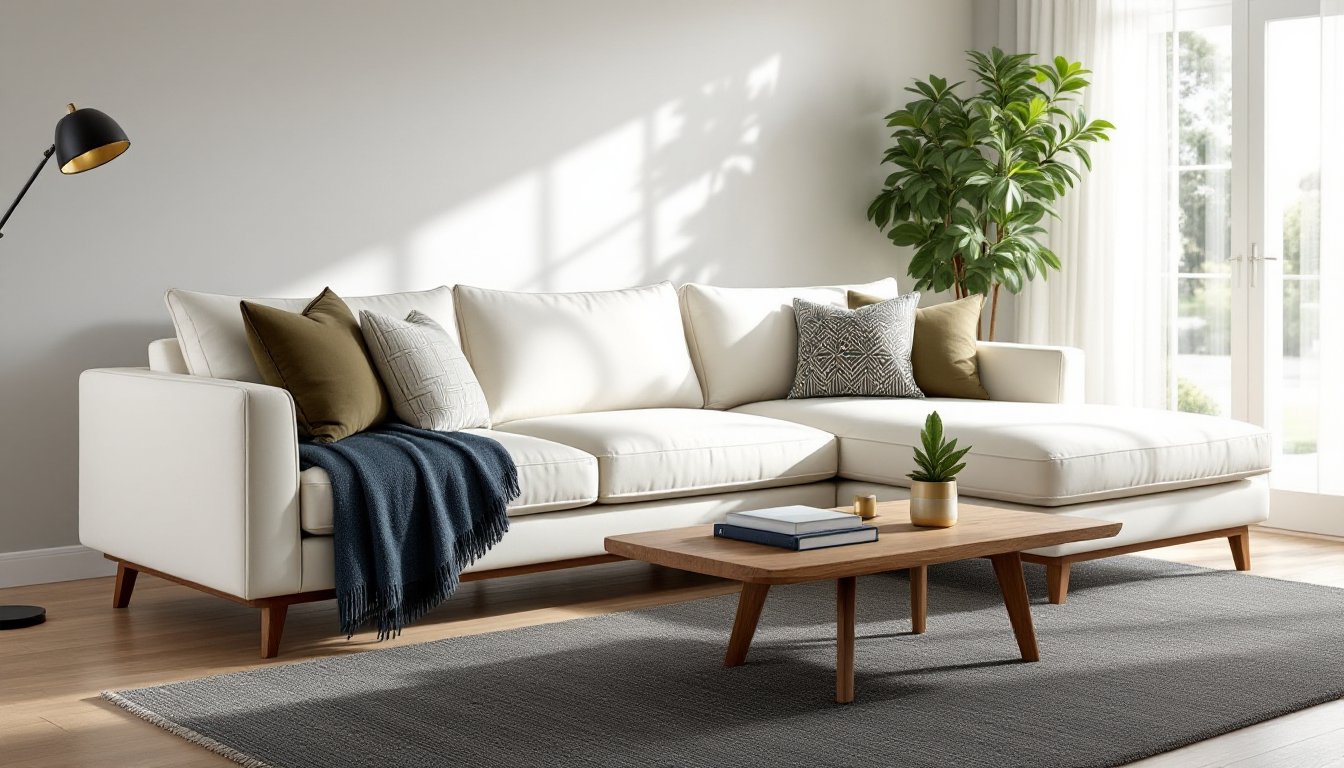
A cream sectional sofa can anchor a living room with elegance and flexibility, but choosing the wrong one means battling stains, sagging cushions, or a layout that just doesn’t work. Unlike darker upholstery that hides wear, cream demands attention to fabric durability, construction quality, and maintenance realities. This guide cuts through the marketing fluff to cover what actually matters: frame construction, stain-resistant treatments, room-specific placement strategies, and practical upkeep. Whether someone’s furnishing a new build or upgrading a well-used family room, understanding these fundamentals ensures a sectional that looks sharp and holds up for years.
Table of Contents
ToggleKey Takeaways
- A cream sectional sofa requires kiln-dried hardwood frames with corner blocks and dowels, plus high-density foam (1.8+ lbs/cubic foot) and eight-way springs or sinuous suspension to prevent sagging and ensure years of durability.
- Performance fabrics like Crypton and Sunbrella use molecular-level stain resistance that won’t wear off, making them worth the 15-25% premium for families with kids or pets, while natural fiber blends offer breathability but need tight weaves of 180+ threads per inch.
- Position cream sectionals away from south- or west-facing windows to prevent UV yellowing and fading, or use UV-filtering window film and rotate reversible cushions monthly to distribute wear and light exposure evenly.
- Immediate spill response (blot, don’t rub) combined with weekly vacuuming and professional cleaning every 12-18 months keeps cream upholstery looking fresh rather than dingy and significantly extends the sofa’s lifespan.
- In small living rooms under 200 square feet, choose apartment-scale cream sectional pieces with 32-34 inch seat depth and narrow arms, then position against the longest wall with intentional empty space to avoid overcrowding.
Why Choose a Cream Sectional Sofa for Your Living Space
Cream hits a sweet spot between the stark formality of white and the warmth of beige. It reflects natural light better than darker upholstery, making smaller rooms feel more open without the clinical edge of pure white. That light-bouncing quality also shows off architectural details like crown molding or coffered ceilings that darker furniture absorbs.
Versatility drives most buying decisions. Cream works across design styles, coastal, farmhouse, transitional, even mid-century modern when paired with walnut legs and brass accents. It won’t clash with bold accent colors the way a jewel-tone sofa might, giving homeowners flexibility to change throw pillows, rugs, or wall colors without replacing a major furniture investment.
That said, cream upholstery isn’t forgiving. Homes with young kids, pets that shed dark fur, or heavy foot traffic near eating areas will see every spill and smudge. It’s honest furniture, beautiful when maintained, frustrating when neglected. Anyone considering cream needs a realistic assessment of their household’s dirt tolerance and a solid stain-removal plan from day one.
Key Features to Look for in a Quality Cream Sectional
Frame construction separates furniture that lasts a decade from pieces that sag in three years. Look for kiln-dried hardwood frames (oak, maple, or birch) joined with corner blocks and dowels, not just staples. Engineered wood or plywood frames work for budget builds, but avoid particleboard, it won’t hold screws through repeated moves or kid-induced stress. Lift one end of the sectional: quality pieces feel substantial but not backbreaking, typically 35-50 pounds per seat section.
Cushion fill determines comfort longevity. High-density foam (1.8 lbs/cubic foot or higher) maintains shape better than standard foam. Many manufacturers use a combination of foam and down wrap, the foam core prevents sagging while the down layer adds initial softness. Avoid all-polyester fill for seat cushions: it compresses quickly. For a family-use sectional, reversible cushions double the usable life before needing replacement.
Suspension systems support the cushions. Eight-way hand-tied springs represent the gold standard but add significant cost. Sinuous (S-shaped) springs offer a practical middle ground for most homes, providing good support at a reasonable price. Webbing alone works for occasional-use furniture but won’t hold up in a primary seating area. Press hard into the seat deck (under the cushion), it should feel firm and supportive, not hollow or saggy.
Fabric and Material Options
Performance fabrics have revolutionized light-colored upholstery. Brands like Crypton, Sunbrella, and Revolution treat fibers at the molecular level so spills bead up instead of soaking in. These aren’t coatings that wear off, the stain resistance is built into the yarn. Expect to pay 15-25% more than standard upholstery, but the investment pays off with the first red wine incident.
Natural fiber blends (cotton-linen or cotton-polyester) offer breathability and a relaxed texture that full synthetics can’t match. Look for tight weaves of 180+ threads per inch, loose weaves snag easily and show dirt faster. Slipcover options work well for natural fabrics, allowing periodic washing that keeps cream looking fresh. Some homeowners buy two sets and rotate them seasonally.
Leather and faux leather in cream tones age differently than fabric. Full-grain leather develops a patina that some love and others find dingy. Top-grain leather with a light protective finish resists stains better but feels less natural. Faux leather (polyurethane or polyvinyl) wipes clean easily but can crack or peel after 5-7 years, especially in humid climates or homes with direct sun exposure. For cream specifically, leather shows less day-to-day soiling than fabric but can discolor from denim dye transfer or body oils over time.
Best Room Layouts and Placement Ideas for Cream Sectionals
Open-concept spaces benefit from sectionals as room dividers. Float a cream sectional 12-18 inches off the back wall with the long side perpendicular to the main seating view (TV or fireplace). This creates a defined living zone without blocking sightlines to the kitchen or dining area. Add a sofa table behind the sectional for task lighting and a visual anchor, without it, the floating arrangement can feel unfinished.
L-shaped rooms or spaces with awkward corners suit sectionals naturally. Position the corner unit in the room’s corner, pulling it 3-4 feet away from walls to avoid a pushed-in look. This configuration leaves space for end tables and floor lamps while maximizing seating without crowding walkways. Ensure at least 30 inches of clearance for primary traffic paths and 18 inches minimum for secondary access routes.
Small living rooms (under 200 square feet) can handle sectionals if proportions match. Choose apartment-scale pieces with shallower seats (32-34 inches deep vs. standard 38-40 inches) and narrower arms (track or English rolled styles take less space than pillow arms). Place the sectional against the longest wall, leaving the opposite side open for visual breathing room. Resist the urge to add extra chairs, overcrowding a small room makes it feel smaller than leaving intentional empty space.
Sun exposure matters more with cream upholstery than darker colors. UV rays yellow natural fibers and fade treated fabrics over time. Position sectionals away from south- or west-facing windows that get afternoon sun, or install UV-filtering window film and blackout-lined curtains. If sun exposure is unavoidable, budget for rotating cushions every few months to even out fading. This practical consideration shapes room layout as much as aesthetics do when working with lighter colors and modern design trends.
How to Keep Your Cream Sectional Sofa Looking New
Immediate spill response determines whether a stain becomes permanent. Blot (never rub) liquids with a clean white cloth, working from the outside in to prevent spreading. For performance fabrics, a damp microfiber cloth handles most spills. For untreated upholstery, keep a solution of 1 teaspoon dish soap per 1 cup warm water in a spray bottle, mist lightly and blot. Test any cleaner on a hidden area first: some fabrics water-spot or darken when wet.
Weekly vacuuming with an upholstery attachment removes the grit and dust that acts like sandpaper on fabric fibers. Pay attention to crevices where the back meets the seat and where cushions join, crumbs and dirt concentrate there. For homes with pets, a rubber pet hair rake pulls embedded fur that vacuums miss. This five-minute habit prevents the gradual dulling that makes cream look dingy over time.
Professional cleaning every 12-18 months extends upholstery life significantly. Hot water extraction (often called steam cleaning) deep-cleans fibers without oversaturating cushions. Verify the cleaner has experience with performance fabrics, some require specific pH-balanced solutions. Budget $150-300 for a full sectional, more for specialty fabrics or severe staining. DIY rental machines work in a pinch but tend to overwet cushions, creating mildew risk if not dried thoroughly.
Protective measures reduce daily wear. Washable throws on high-contact areas (where heads rest, where feet prop up) catch oils and dirt before they reach upholstery. Scotchgard or similar fabric protectors add a layer of stain resistance to untreated fabrics, but they require reapplication after each cleaning. For leather, conditioning every 6 months prevents cracking and maintains suppleness, use products specifically formulated for the leather type (aniline, semi-aniline, or pigmented).
Sunlight management goes beyond placement. Rotate reversible cushions every month so wear and UV exposure distribute evenly. Close curtains during peak sun hours if the sectional can’t be repositioned. Over time, cream fabrics develop a warm patina from use and light exposure, some homeowners embrace this as character, while others view it as deterioration. Setting realistic expectations about aging upfront prevents disappointment down the road.
Styling Your Cream Sectional With Pillows, Throws, and Decor
Pillow layering adds depth to a monochromatic base. Start with two 22-inch square pillows at each end for structure, add 18-inch pillows in patterns or textures in front, then finish with a 12×20-inch lumbar pillow in the center for visual interest. Odd numbers look more dynamic than even, five or seven pillows total works better than six. Mix scales: pair large-scale florals with small geometrics, or combine solid linen with chunky knit textures.
Color strategy depends on the room’s vibe. For coastal or Scandinavian styles, layer shades of blue and gray with natural jute or rattan accents. Farmhouse leans into warm terracotta, olive, and rust with plaid or ticking stripe patterns. Modern spaces might add black, charcoal, and brass for contrast. The cream base handles bold accent colors that would clash with patterned upholstery, it’s functionally neutral even though being warmer than true white.
Throw blankets serve dual purposes: style and protection. Drape one casually over an arm or the back corner rather than folding it precisely, the lived-in look suits contemporary interiors better than rigid symmetry. Choose textures that contrast with the sectional: a chunky cable knit against smooth linen, or a lightweight Turkish cotton throw against a velvet sectional. Keep throws within reach for actual use, decorative items that don’t serve a function feel staged.
Coffee table styling balances the sectional’s visual weight. A cream sectional’s softness pairs well with substantial wood or metal coffee tables that ground the space. Avoid glass tops with cream upholstery, they create a washed-out, floating effect. On the table, group items in threes: a stack of books, a small plant, and a decorative object. Vary heights and leave 40-50% of the table surface empty to maintain a sense of calm rather than clutter.
Area rugs define the seating zone and protect flooring. For cream sectionals, choose rugs with medium to dark tones that hide dirt better than light rugs do. The rug should extend 12-18 inches beyond the sectional’s footprint on all visible sides. In open layouts, this grounds the furniture grouping visually. Pattern in the rug allows for solid pillows: a solid rug invites patterned textiles. The interplay between these elements creates visual interest while maintaining the flexibility that makes cream furniture appealing for evolving design preferences.
Conclusion
A cream sectional delivers timeless versatility when backed by smart material choices and honest maintenance habits. Focus on durable frame construction, stain-resistant fabrics, and placement that protects against sun damage. Regular upkeep keeps cream looking fresh rather than dingy, and thoughtful styling lets the neutral base adapt as design preferences shift over the years.