Open shelf organization isn’t just a trend; it’s a lifestyle choice that can transform any space from chaotic to charming. Imagine walking into a room where everything has its place, and your favorite books and decor are on display like trophies of your impeccable taste. It’s like giving your belongings a VIP pass to the center stage of your home.
Overview of Open Shelf Organization
Open shelf organization involves arranging items on shelves without doors, allowing easy access and visibility. This approach enhances the aesthetics of a space, enabling individuals to showcase belongings while maintaining functionality. Various objects, such as books, plants, and decorative items, can find a place on open shelves, creating a visually appealing display.
It promotes personal expression, reflecting an individual’s taste and style. An organized open shelf encourages tidiness and minimizes clutter, which can lead to a more serene environment. Labels can provide clear identification of items, making retrieval effortless.
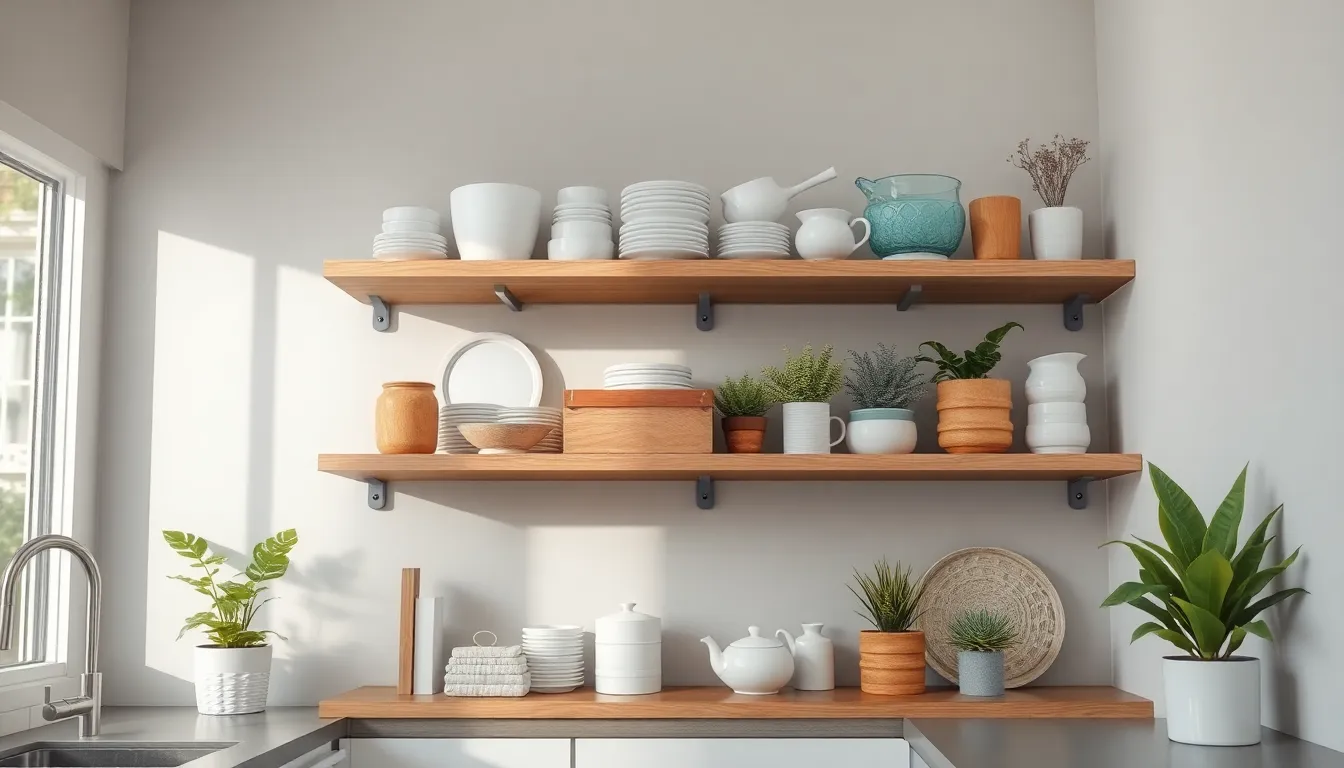
In kitchens, open shelving can house dishware, spices, and cookbooks, improving both convenience and design. Living rooms benefit from open shelves that display art pieces and family photos, which create a personalized atmosphere. Offices also see advantages from this organization method by displaying supplies and files clearly.
Several strategies can optimize open shelf spaces. Grouping similar items together maintains cohesiveness. Using decorative boxes or baskets can hide less attractive objects while still keeping them accessible. Color coordination can further enhance visual appeal, drawing the eye and making shelves look uniformly organized.
Maintenance plays a crucial role in the effectiveness of open shelf organization. Regularly decluttering shelves prevents overcrowding and ensures that showcased items remain meaningful and attractive. Additionally, a consistent cleaning schedule can keep surfaces dust-free, preserving the visual integrity of open shelves.
This approach contributes not only to a more organized space but also to a lifestyle that embraces simplicity and open design. Adapting open shelf organization can transform any area, making it both functional and stylish.
Benefits of Open Shelf Organization

Open shelf organization offers numerous advantages that enhance both functionality and design in a space. These benefits include improved accessibility and enhanced aesthetics.
Improved Accessibility
Open shelves provide easy access to items, eliminating the need to open and close cabinet doors. Organizers can find everyday essentials quickly, whether in kitchens, offices, or living areas. High shelves won’t hinder visibility, allowing a clear view of contents at all times. Frequent use of items remains convenient, as they stay within reach and promote efficiency in daily routines. This approach minimizes time spent searching for necessities, contributing to a seamless experience in any environment.
Enhanced Aesthetics
Visually appealing shelves can transform a space into a stunning showcase. Displaying items like books, art, and decorative pieces creates a personalized atmosphere, reflecting individual style. Open shelving encourages creativity in arrangement, allowing for unique combinations that enhance design. Color coordination and thematic grouping improve overall visual harmony while preventing clutter accumulation. An inviting ambiance emerges, making spaces feel more welcoming and organized, resonating with personal taste and lifestyle.
Key Principles of Open Shelf Organization
Open shelf organization incorporates strategic techniques to enhance space utilization. Understanding key principles ensures effective arrangement while maintaining aesthetics.
Zoning and Categorization
Zoning involves designating specific areas for different categories of items. Grouping similar items—such as books, dishes, or decorative pieces—creates an organized look. Each zone serves a purpose, making items easy to find and access. For example, place cookbooks near the kitchen and office supplies on a dedicated shelf within workspaces. This technique minimizes visual clutter and streamlines routines. Additionally, labeling can clarify each zone’s function, further aiding quick identification of items.
Visual Cohesion
Visual cohesion enhances the overall look of open shelves. Using a consistent color palette ties items together, creating harmony across the display. Incorporating complementary materials or textures—like wood, glass, or metal—adds depth and interest. Arranging items in varying heights can create a dynamic visual flow while avoiding monotony. For instance, place taller objects next to lower items to maintain balance. Incorporating decorative boxes or baskets adds dimension and further organizes smaller items, contributing to a cohesive appearance.
Challenges of Open Shelf Organization
Open shelf organization presents certain challenges despite its many benefits. Understanding these issues helps in creating a balanced approach to shelving solutions.
Dust and Maintenance
Dust accumulation on open shelves is a significant concern for many. Regular cleaning is essential, as visible dust can detract from the aesthetic appeal of displayed items. Items like books and decorative pieces require frequent attention to maintain their charm. Using microfiber cloths helps capture dust effectively. Additionally, it’s beneficial to have a cleaning schedule, ensuring that maintenance becomes a routine. Incorporating protective covers for certain items can further minimize dust exposure while preserving their visual integrity.
Space Limitations
Space limitations pose another challenge in open shelf organization. Shelves without doors can quickly become overcrowded, leading to a cluttered appearance. Judicious selection of displayed items is vital to maintain an organized look. Some might find it hard to display all their belongings, so prioritizing favorite pieces can enhance visual appeal. Creative storage solutions, such as stackable bins, can maximize vertical space. Additionally, assessing frequently used items helps in organizing shelves efficiently, ensuring that open shelving remains practical rather than overwhelming.
Best Practices for Open Shelf Organization
Effective open shelf organization elevates both functionality and aesthetics. Implementing specific strategies can make a significant difference in the outcome.
Strategic Placement of Items
Placement enhances visibility and accessibility. Start by positioning frequently used items at eye level. This allows for easy access during daily routines. Group similar items together to create a cohesive look. Balance larger objects with smaller ones to avoid visual clutter. Experimenting with varying heights can also add interest to the arrangement. Moreover, reserving top shelves for rare-use items keeps the lower shelves functional. Rearranging items based on seasons or holidays updates the space effortlessly. Ensuring that every piece has a designated spot fosters organization.
Use of Decorative Bins and Baskets
Incorporating decorative bins and baskets adds style while promoting organization. Choosing pieces that complement the room’s aesthetic enhances visual harmony. Bins can contain smaller items, preventing chaos on open shelves. Larger baskets work well for storing bulkier items or linens. Utilizing labels on bins helps with quick identification and retrieval. Multi-functional bins serve as both storage and decorative elements. Opting for natural materials like wicker or wood introduces texture and warmth. A consistent theme or color palette across baskets creates a unified appearance.
Conclusion
Embracing open shelf organization can transform any space into a functional and stylish haven. By thoughtfully arranging items and incorporating personal touches, individuals can create an inviting atmosphere that reflects their unique style. The benefits of accessibility and aesthetic appeal make this approach a practical choice for various settings.
While challenges like dust accumulation and space limitations exist, strategic planning and regular maintenance can mitigate these issues. Prioritizing items and utilizing creative storage solutions will ensure that open shelves remain both beautiful and organized. Ultimately, open shelf organization encourages a lifestyle of simplicity and creativity, enhancing the overall experience of any room.