
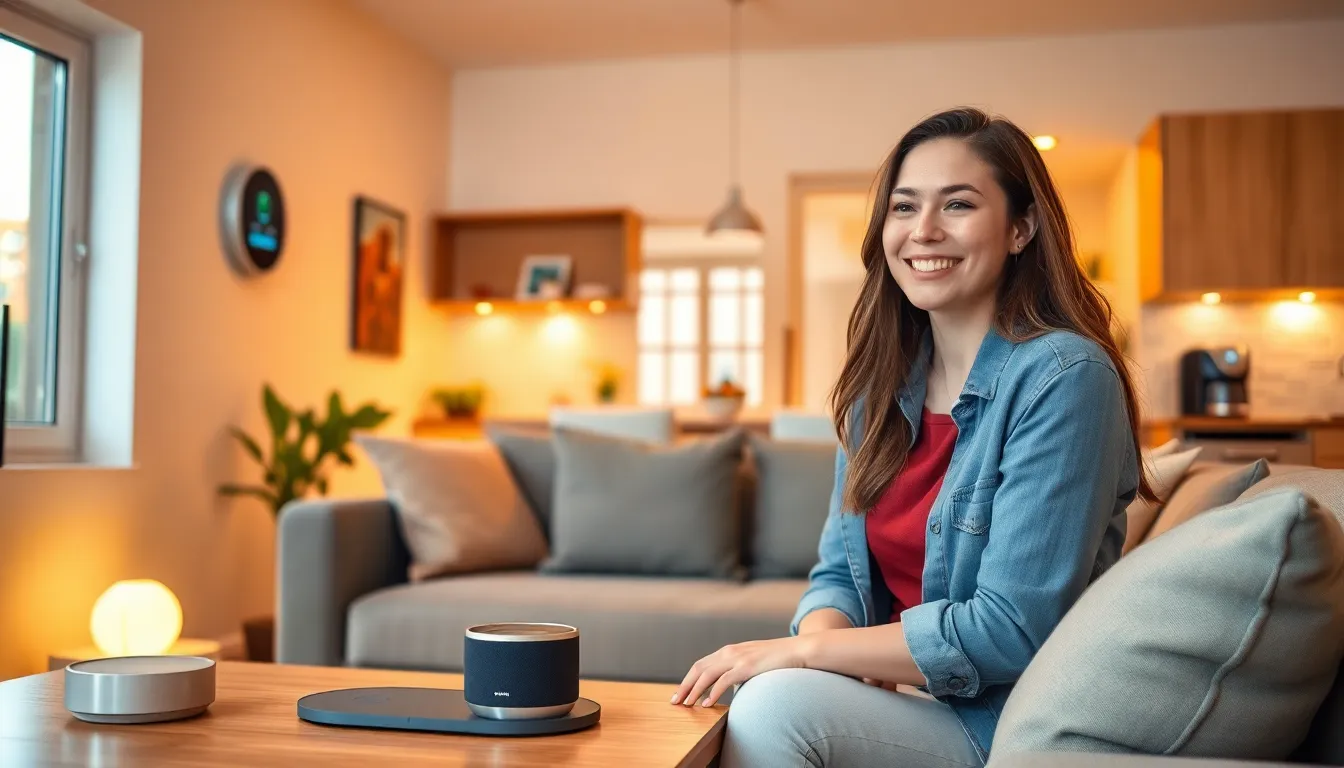
Imagine waking up to the gentle hum of your coffee maker brewing the perfect cup while the lights gradually brighten, mimicking a sunrise. That’s the magic of smart home IoT—where everyday gadgets become your personal assistants, making life easier and a bit more fun.
With the Internet of Things transforming homes into tech-savvy havens, it’s time to embrace the future. From smart thermostats that know when you’re too hot to handle, to security systems that keep an eye on your castle, these devices don’t just add convenience; they add a dash of flair to your life. Who knew that controlling your home could be as easy as telling your assistant to “turn down the heat” while you lounge on the couch? Get ready to explore how smart home IoT can turn your living space into a futuristic playground.
Overview Of Smart Home IoT
Smart home IoT refers to the integration of Internet of Things technology within residential environments. Devices connect to the internet, facilitating communication and automation. Common gadgets include smart speakers, smart locks, and energy-efficient appliances. These tools offer users enhanced control and management of their home settings.
Smart home systems can optimize energy use by adjusting lighting and heating based on occupancy. For example, smart thermostats learn user behavior, reducing unnecessary heating and cooling when no one is home. Security features, such as surveillance cameras and alarm systems, provide real-time monitoring, increasing safety and peace of mind.
Automation stands at the center of smart home IoT. Homeowners can program devices to perform actions at specific times or trigger responses based on sensors. This level of automation simplifies daily tasks, such as setting lights to turn on at sunset or starting coffee machines in the morning.
Integration across platforms enhances the user experience. Many devices are compatible with various ecosystems, allowing seamless coordination. For instance, linking smart lights with voice assistants enables hands-free control for added convenience.
Data privacy concerns often arise with smart home IoT. Homeowners should prioritize security measures, such as regularly updating passwords and enabling encryption. Awareness of these issues helps ensure a safer smart home experience.
Smart home IoT technology provides a framework for modern living. Control, efficiency, and security form the backbone of this innovative approach to home management. Embracing these advancements can lead to a more connected and enjoyable lifestyle.
Benefits Of Smart Home IoT
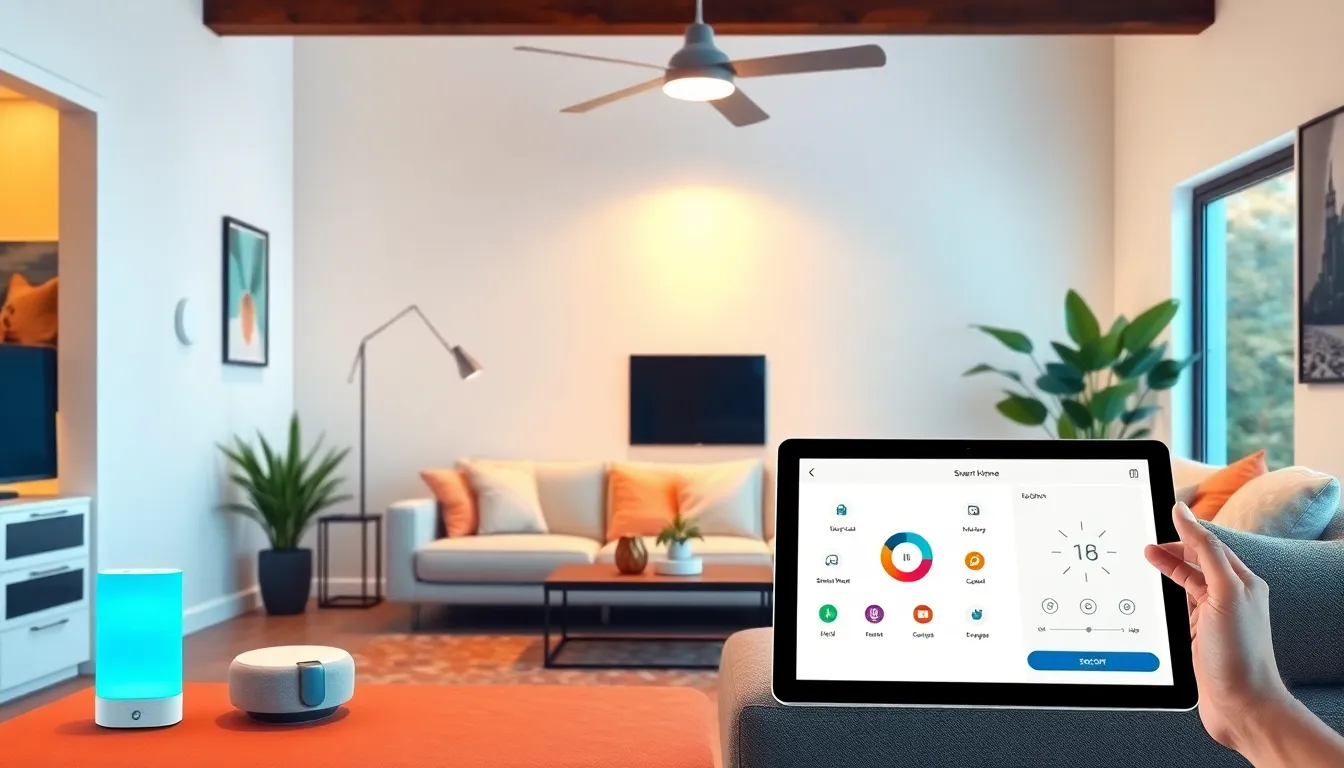
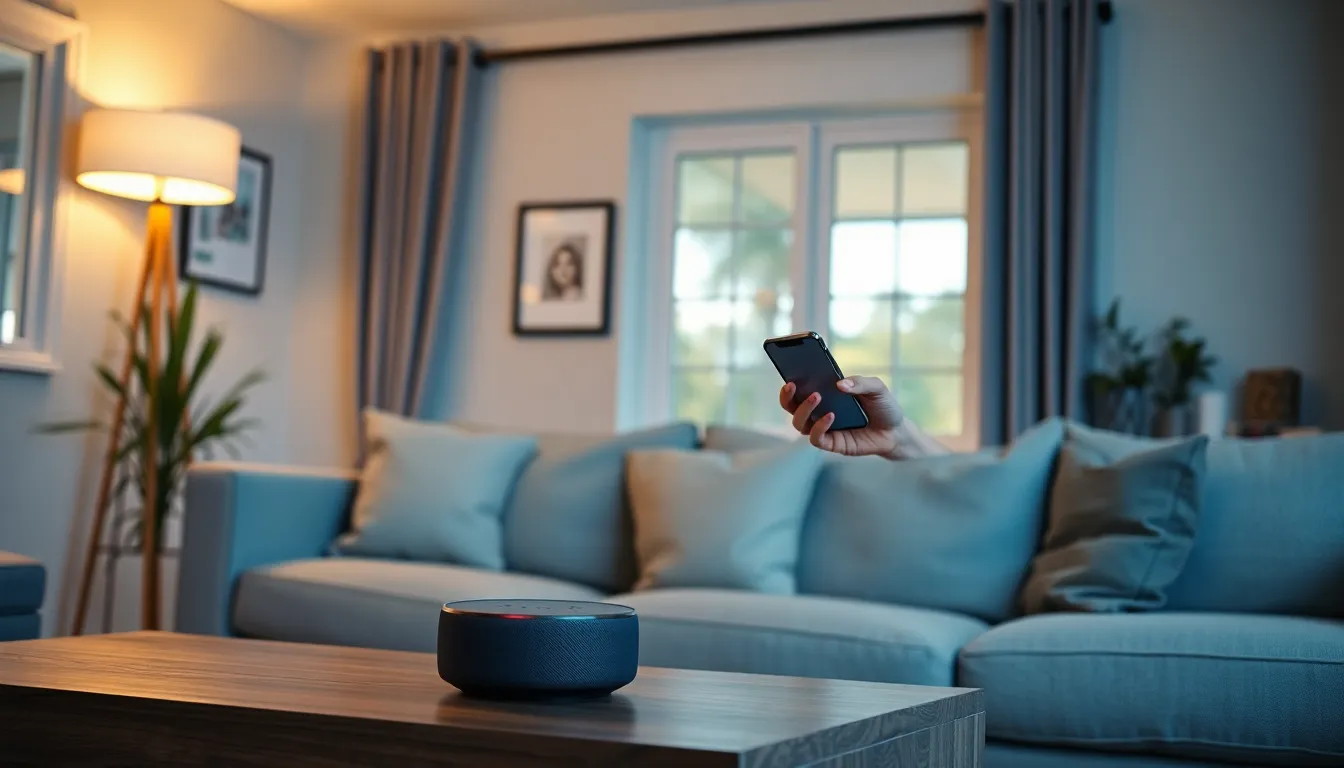
Smart home IoT offers numerous advantages that transform everyday living. These benefits include increased convenience, enhanced security, improved energy efficiency, and better overall quality of life.
Increased Convenience
Convenience ranks high among the benefits of smart home IoT. Through automation, devices carry out tasks with minimal user input. Smart speakers, for example, allow homeowners to control lighting or play music using simple voice commands. Programmable schedules enable appliances, such as coffee makers, to start brewing at specific times. Integration across devices further streamlines daily routines, allowing thermostats to adjust automatically when residents come home. With mobile apps, individuals access their home systems from any location, whether they’re at work or traveling. This level of control contributes to a life that feels comfortable and effortless.
Enhanced Security
Enhanced security significantly improves with smart home IoT. Users can monitor their property through real-time surveillance feeds from cameras. Smart locks offer a convenient way to secure doors remotely, allowing users to grant access to guests without being present. Alerts inform homeowners of unusual activities, enabling quick responses to potential threats. Alarm systems connected to smart devices provide instant notifications regarding security breaches. Implementing smart lighting systems can deter intruders by simulating occupancy when no one is home. These advanced security measures ensure residents feel safe and protected in their living spaces.
Key Components Of Smart Home IoT
Smart home IoT comprises various essential elements that contribute to its functionality and efficiency. Understanding these components is crucial for leveraging the full potential of connected living spaces.
Smart Devices
Smart devices serve as the backbone of smart home IoT, integrating technology into daily tasks. Examples include smart thermostats that adjust temperatures automatically, smart lights that can be controlled remotely, and voice assistants that execute commands hands-free. These gadgets utilize sensors to collect data, enabling them to respond dynamically to user preferences and environmental changes. Examples of common smart devices encompass smart locks for enhanced security and smart cameras for monitoring homes in real time. Increased interoperability among these devices allows seamless communication, resulting in a more efficient living experience.
Communication Protocols
Communication protocols facilitate interaction between smart devices and the internet. Popular protocols include Wi-Fi, Zigbee, and Z-Wave, each offering different strengths for connectivity. Wi-Fi ensures high bandwidth necessary for data-heavy applications such as video streaming. Zigbee operates on a low-power mesh network, ideal for battery-operated devices, while Z-Wave provides reliable communication over longer distances compared to Bluetooth. Ensuring compatible protocols among devices enhances operational reliability, allowing for a cohesive smart home setup. Integration of these protocols fosters an interconnected ecosystem, promoting optimal performance across all smart devices.
Challenges And Considerations
Smart home IoT technology brings numerous advantages, yet it also presents challenges that homeowners must consider.
Privacy Concerns
Data privacy poses significant challenges in smart home environments. Many devices collect personal information, which can be vulnerable to unauthorized access. Security breaches might expose sensitive data, leading to misuse. Homeowners should regularly update device firmware to minimize risks. Implementing strong, unique passwords enhances security layers. They’ll benefit from reviewing privacy settings on devices to control data sharing. Awareness of what data is collected can drive informed decisions on device usage.
Compatibility Issues
Compatibility issues can arise when integrating various smart home devices. Not all devices communicate seamlessly due to differing communication protocols. This inconsistency may hinder automation or require additional hubs for control. Homeowners must investigate compatibility before purchasing new devices. Choosing brands that support common standards like Wi-Fi, Zigbee, or Z-Wave simplifies integration. Understanding device limitations helps in selecting compatible equipment. Working with compatible technologies streamlines user experience and enhances overall home automation efficiency.
Future Trends In Smart Home IoT
The future of smart home IoT promises significant advancements. Increased integration of artificial intelligence transforms how devices learn user habits. Enhanced machine learning capabilities enable devices to make recommendations and automate behaviors.
Voice-controlled interfaces are expected to become more sophisticated. They’ll allow users to interact with multiple devices effortlessly, creating a more seamless experience. Smart assistants are likely to communicate more effectively with varied brands, improving overall compatibility.
Additionally, energy management systems will evolve, utilizing data analytics to optimize energy consumption. Homeowners gain the ability to track energy use in real time and adjust settings for maximum efficiency.
Privacy measures will become a priority as more devices enter the market. Companies may incorporate robust security features to safeguard personal information. Regular software updates and encryption methods could become standard practices, enhancing user trust.
Smart home installations might become more modular. Homeowners will have the flexibility to customize their setups with ease, adding or removing devices as needed.
In new developments, smart homes might be designed from the ground up. Builders could integrate IoT technology during construction, ensuring a fully connected environment from day one.
Sustainability will play a crucial role in future devices. Manufacturers are likely to focus on creating energy-efficient products that reduce environmental impact while enhancing user convenience.
Lastly, the growth of 5G connectivity can accelerate the smart home IoT ecosystem. Faster internet speeds lead to improved device communication and real-time responses, further enriching the smart home experience.


